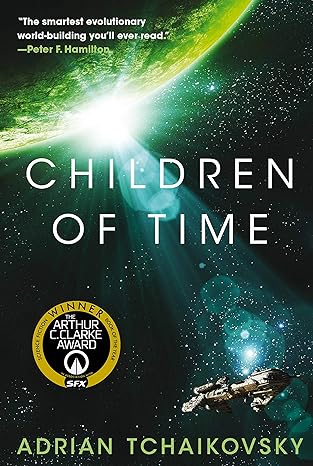
The last remnants of the human race left a dying Earth, desperate to find a new home among the stars. Following in the footsteps of their ancestors, they discover the greatest treasure of the past age—a world terraformed and prepared for human life.
But all is not right in this new Eden. In the long years since the planet was abandoned, the work of its architects has borne disastrous fruit. The planet is not waiting for them, pristine and unoccupied. New masters have turned it from a refuge into mankind's worst nightmare.
Now two civilizations are on a collision course, both testing the boundaries of what they will do to survive. As the fate of humanity hangs in the balance, who are the true heirs of this new Earth?
Who will inherit this new Earth?
The last remnants of the human race left a dying Earth, desperate to find a new home among the stars. Following in the footsteps of their ancestors, they discover the greatest treasure of the past age—a world terraformed and prepared for human life.
But all is not right in this new Eden. In the long years since the planet was abandoned, the work of its architects has borne disastrous fruit. The planet is not waiting for them, pristine and unoccupied. New masters have turned it from a refuge into mankind's worst nightmare.
Now two civilizations are on a collision course, both testing the boundaries of what they will do to survive. As the fate of humanity hangs in the balance, who are the true heirs of this new Earth?
The Book starts out with the human interstellar empire at its peak, and the greatest human scientist, Dr. Avrana Kern, is watching the disastrous end of an experiment to terraform a planet that is several light years away from earth, and try to recreate human evolution there.
Unknown to her, a catastrophe is about to befall the empire she knows, plunging humanity into the dark ages and relegating her experiment to mere legend.
After they are able to salvage a ship from the ruins of the old world, the last colony of humans are on their way to that same planet, seeking a place to set down roots and grow once more.
This sets up a scenario where you are watching an alien invasion from the point of view of the aliens (the human beings). I found myself, very much like Dr. Kern, rooting against that ship …
The Book starts out with the human interstellar empire at its peak, and the greatest human scientist, Dr. Avrana Kern, is watching the disastrous end of an experiment to terraform a planet that is several light years away from earth, and try to recreate human evolution there.
Unknown to her, a catastrophe is about to befall the empire she knows, plunging humanity into the dark ages and relegating her experiment to mere legend.
After they are able to salvage a ship from the ruins of the old world, the last colony of humans are on their way to that same planet, seeking a place to set down roots and grow once more.
This sets up a scenario where you are watching an alien invasion from the point of view of the aliens (the human beings). I found myself, very much like Dr. Kern, rooting against that ship that represented the last of our kind, hoping against hope that humanity goes extinct.
If you want a new point of view on evolution, intelligence, empathy and what it means to be human, Tchaikovsky's space epic is the book for you. I found myself wiping a few tears from my eyes at the climax of the book, and while it's not a page turner, it is a poignant, thoughtful story
Set across thousands of years, it nevertheless reads through without feeling stretched. It follows two threads. The first is the story of uplifting a species. The second is the far-off descendants of those who started the uplift. Themes of the nature of humanity and the drive for survival.
As a life-long arachnophobe, Tchaikovsy did something I honestly never thought could happen. He made me pull for an arachnid species. He wrote them in such an empathetic way. He had me rooting for them and their species. If the movie is ever made, though, I'm NOT going to see it.
I liked the parallels he maintained between the two story lines. And I really enjoyed the gender flip on oppression for the spiders. Of course the male spiders were lower ranked in society. It was a bit heavy-handed at times, but maybe that'll just help men who don't get …
Set across thousands of years, it nevertheless reads through without feeling stretched. It follows two threads. The first is the story of uplifting a species. The second is the far-off descendants of those who started the uplift. Themes of the nature of humanity and the drive for survival.
As a life-long arachnophobe, Tchaikovsy did something I honestly never thought could happen. He made me pull for an arachnid species. He wrote them in such an empathetic way. He had me rooting for them and their species. If the movie is ever made, though, I'm NOT going to see it.
I liked the parallels he maintained between the two story lines. And I really enjoyed the gender flip on oppression for the spiders. Of course the male spiders were lower ranked in society. It was a bit heavy-handed at times, but maybe that'll just help men who don't get it now see it.