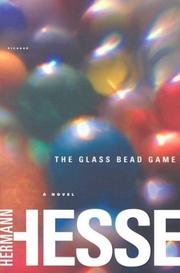

Julia_98 reviewed The glass bead game by Hermann Hesse
Where Intellect Met Silence and Asked for More
4 stars
At first glance, The Glass Bead Game appeared distant to me, almost austere. Hermann Hesse constructs a future society called Castalia, devoted entirely to intellectual pursuit and the abstract art known as the Glass Bead Game. Rather than rushing into conflict, the novel unfolds through biography, reflection, and philosophical meditation. I felt myself slowing down, adjusting to a rhythm shaped by contemplation rather than action.
The story follows Joseph Knecht, whose rise within the Castalian Order culminates in his appointment as Magister Ludi, Master of the Game. As I traced his journey from gifted student to spiritual authority, I sensed both admiration and doubt. The Game itself symbolizes the unification of music, mathematics, and culture into a single harmonious system. Intellect here is refined, disciplined, and almost sacred. Yet as Knecht matures, he begins to question whether such purity comes at a cost.
What moved me most was …
At first glance, The Glass Bead Game appeared distant to me, almost austere. Hermann Hesse constructs a future society called Castalia, devoted entirely to intellectual pursuit and the abstract art known as the Glass Bead Game. Rather than rushing into conflict, the novel unfolds through biography, reflection, and philosophical meditation. I felt myself slowing down, adjusting to a rhythm shaped by contemplation rather than action.
The story follows Joseph Knecht, whose rise within the Castalian Order culminates in his appointment as Magister Ludi, Master of the Game. As I traced his journey from gifted student to spiritual authority, I sensed both admiration and doubt. The Game itself symbolizes the unification of music, mathematics, and culture into a single harmonious system. Intellect here is refined, disciplined, and almost sacred. Yet as Knecht matures, he begins to question whether such purity comes at a cost.
What moved me most was his growing awareness of isolation. Castalia’s devotion to knowledge excludes the unpredictability of lived experience. Reading Knecht’s reflections, I felt the tension between contemplation and engagement. His eventual decision to leave his position did not feel rebellious. It felt necessary. I experienced it as a quiet act of integrity, a recognition that wisdom must touch life rather than remain above it.
Hesse’s prose demands patience. Long passages of reflection replace dramatic conflict, and I felt intellectually challenged rather than emotionally swept away. Still, there were moments of quiet beauty, especially in Knecht’s inner doubts and final choices. By the end, I felt reflective rather than resolved.
Closing the book, I carried a calm seriousness with me. The Glass Bead Game reminded me that knowledge without risk can become sterile, and that true understanding may require stepping beyond protected systems into uncertain human reality.