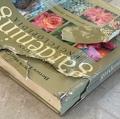
sifuCJC reviewed To Be Taught, If Fortunate by Becky Chambers
Quick and poignant
5 stars
Such a great message about the exploration of science. I only hope it gets to those who need to hear it.
Quick read. About 4 hrs.

Becky Chambers: S pokorou a nadějí (Czech language, 2021, Host)
172 pages
Czech language
Published 2021 by Host.
To Be Taught, if Fortunate is a 2019 science fiction novella by Becky Chambers.
Such a great message about the exploration of science. I only hope it gets to those who need to hear it.
Quick read. About 4 hrs.
Le roman est écrit à la première personne, il s’agit du rapport envoyé par Ariadne O’Neill, notre narratrice, ingénieure à bord du Merian, un vaisseau spatial terrien partis avec 4 astronautes à son bord pour explorer des exoplanètes susceptibles d’abriter la vie.
Nous sommes aux débuts du 22e siècle. On comprends que les États ont arrêtés de financer la recherche spatiale, « Comment penser aux étoiles quand les océans débordent ? Comment s’intéresser aux écosystèmes aliens quand la chaleur rend les villes inhabitables » mais que certains ont refusé cet abandon et ont redonné un second souffle à la conquête spatiale sous la forme d’un projet participatif, le GAO. Plus de politiques, plus d’intérêts ni nationaux ni économiques. L'exploration par amour de l'exploration.
Nous ne sommes pas très éloignés dans le temps, mais nos 4 astronautes ne se posent pas la question de la possibilité d’une vie extraterrestres. …
Le roman est écrit à la première personne, il s’agit du rapport envoyé par Ariadne O’Neill, notre narratrice, ingénieure à bord du Merian, un vaisseau spatial terrien partis avec 4 astronautes à son bord pour explorer des exoplanètes susceptibles d’abriter la vie.
Nous sommes aux débuts du 22e siècle. On comprends que les États ont arrêtés de financer la recherche spatiale, « Comment penser aux étoiles quand les océans débordent ? Comment s’intéresser aux écosystèmes aliens quand la chaleur rend les villes inhabitables » mais que certains ont refusé cet abandon et ont redonné un second souffle à la conquête spatiale sous la forme d’un projet participatif, le GAO. Plus de politiques, plus d’intérêts ni nationaux ni économiques. L'exploration par amour de l'exploration.
Nous ne sommes pas très éloignés dans le temps, mais nos 4 astronautes ne se posent pas la question de la possibilité d’une vie extraterrestres. Ils savent qu’elle existe, et l’ont toujours su.
"Je n’ai jamais connu une Terre qui ignore l’existence de la vie ailleurs. Vingt-neuf ans avant ma naissance, la sonde Cetus a effectué dans les geysers d’Europe des prélèvements riches en bactéries ; quand mes parents faisaient leurs études, les rovers de Mars ont envoyé des photos d’arthropodes fossilisés. Je n’imagine pas l’époque de la solitude avant cela, quand nous voyions la Terre comme une oasis dans le désert galactique. J’aurais aimé la vivre, je crois."
C’est court, mais dense. Ce n’est pas de la hard science, pas du space opéra, mais ça reste une vraie réflexion sur le besoin de l’humanité d’explorer de de comprendre. C’est rassurant aussi car c’est de la science-fiction positive qui, sans faire l’impasse sur l’état de la planète Terre, sans pulsions guerrières, sans intrigues politiques, elle relate “juste” une saine curiosité.
Ce n’est tout de même pas un roman trop simpliste, car Becky Chambers n’évacue pas les difficultés techniques posées par le voyage spatial. Les trajets sont longs, très longs, et nos 4 astronautes sont donc placés en sommeil artificiel dans un vaisseau totalement automatisé. Ce sommeil ralentit leur vieillissement, mais ne l’arrête pas. À chaque reveil, ils constate les stigmates du temps qui passe. Pas d’étonnement et pas de regrets ici, ils le savaient, ils s’y étaient préparés, c’est le prix à payer et ils sont heureux de la payer par amour de la science, pour satisfaire leur curiosité, et celui de l’Humanité toute entière.
De la même manière, les messages du Merian mettent 14&nbp;ans à atteindre la Terre, tout comme ceux de la Terre mettent 14 ans à leurs parvenir. Peu d’humain ont été aussi isolés, et il est compliqué de se sentir concernés par les nouvelles qui leurs parviennent, en sachant que ce sont déjà plus des nouvelles alors même qu’ils ont l’impression, eux, d’être parti hier…
Beck Chambers ne fait pas non plus l’impasse sur la question du transhumanisme. À chaque nouvelle planète, des patchs déclenchent de subtiles modifications, réversibles, sur le corps de nos 4 astronautes. Des paillettes incrustées dans la peau sur une planète éloignée de son soleil, pour mieux réfléchir la lumière, ou au contraire une peau plus épasse sur une planète soumisse à un rayonnement massif d’ultraviolet. Tout comme l’exploration du GAO est très différente des programmes de la Nasa ou de l’ESA, et encore plus de de ceux de SpaceX, ces réponse donnent envie de croire à la possibilité d’un technosolutionnisme, bien éloigné lui aussi des délires d’Elon Musk et de Neuralink.
Bref, vous l’aurez compris, j'ai beaucoup aimé cette lecture. C’est court mais pas sans profondeur, c’est original et ça donne envie de croire à la possibilité de l'émergence d'une science positive
When i started reading this novella, I falsely assumed it was part of the Wayfarers cycle. It's not, but it's also not important.
The book recounts the journey of four astronauts from earth. It tells of their struggles and joys, their passions and woes. I thoroughly enjoyed the way the story unfolds, the characters are painted and the way they are interacting with each other. And, without spoiling it, I really loved how the author decided to end the book.
I finished the book two days ago. I am still enchanted.
When i started reading this novella, I falsely assumed it was part of the Wayfarers cycle. It's not, but it's also not important.
The book recounts the journey of four astronauts from earth. It tells of their struggles and joys, their passions and woes. I thoroughly enjoyed the way the story unfolds, the characters are painted and the way they are interacting with each other. And, without spoiling it, I really loved how the author decided to end the book.
I finished the book two days ago. I am still enchanted.
I finished this book a couple of weeks ago. Like all of Chambers's books, it feels as though nothing much is going on in them at any given moment, but in a good way. There are interpersonal relationships continuously developing and evolving, there's the discoveries about the planets that the explorers land on, and then there is the revelation about events back on Earth which the explorers, 17 light years away, can do nothing about.
For such a simple and shortish story, I found the revelation at the end to be suitably profound, as well as the way Chambers left unanswered, but in a satisfying way, some of the questions about what had happened back on Earth.
I finished this book a couple of weeks ago. Like all of Chambers's books, it feels as though nothing much is going on in them at any given moment, but in a good way. There are interpersonal relationships continuously developing and evolving, there's the discoveries about the planets that the explorers land on, and then there is the revelation about events back on Earth which the explorers, 17 light years away, can do nothing about.
For such a simple and shortish story, I found the revelation at the end to be suitably profound, as well as the way Chambers left unanswered, but in a satisfying way, some of the questions about what had happened back on Earth.
If you love space exploration, have wondered about exoplanets and how we could explore these close yet, for a human lifespan, far planets this novella will probably appeal to you. It did to me, I absolutely loved it.
This book is on the rather hard-SF part with plausible technology and discoveries. But although its about exploring distant alien worlds it is a very human story. And with "human" I mean both in terms of humanity; its moral, scientific questions our societies are concerned with. But also very human on an interpersonal level between the four crew members and as well in terms of our evoloved biology and survival instincts that both may not be as suited for life outside of earth.
Its 5 stars for me, because its a perfect execuation of the ~150 pages / novella format, sucks you right in with the first couple pages. And this mid/near-future, …
If you love space exploration, have wondered about exoplanets and how we could explore these close yet, for a human lifespan, far planets this novella will probably appeal to you. It did to me, I absolutely loved it.
This book is on the rather hard-SF part with plausible technology and discoveries. But although its about exploring distant alien worlds it is a very human story. And with "human" I mean both in terms of humanity; its moral, scientific questions our societies are concerned with. But also very human on an interpersonal level between the four crew members and as well in terms of our evoloved biology and survival instincts that both may not be as suited for life outside of earth.
Its 5 stars for me, because its a perfect execuation of the ~150 pages / novella format, sucks you right in with the first couple pages. And this mid/near-future, plausible explonet exploration outline was simply very intruiging for me personal, it seems to have fulfilled a personal longing for a story like this.
The version I read also includes a double-interview between Becky Chambers and her Mother, who happens to be an astrobiology educator.
Unlike the super-high-tech far future of her Wayfarers series, Chambers focuses on just the near-future of the human race. Seen from a team of exoplanet explorers surveying alien life, To Be Taught paints a future where governments fail in the mission to space but the human spirit leads ordinary people to crowdfund the mission instead. And when the interstellar mission outlasts human lifespans, government lifespans and even societal lifespans, Chambers leaves us with a deeply personal question, ask from both her perspective and that of the protagonist, chronologically ancient, barely human and too distant to ever return home: how much is space exploration worth?
Unlike the super-high-tech far future of her Wayfarers series, Chambers focuses on just the near-future of the human race. Seen from a team of exoplanet explorers surveying alien life, To Be Taught paints a future where governments fail in the mission to space but the human spirit leads ordinary people to crowdfund the mission instead. And when the interstellar mission outlasts human lifespans, government lifespans and even societal lifespans, Chambers leaves us with a deeply personal question, ask from both her perspective and that of the protagonist, chronologically ancient, barely human and too distant to ever return home: how much is space exploration worth?