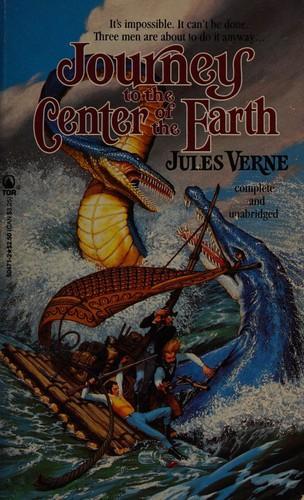

Julia_98 reviewed Journey to the Center of the Earth by Jules Verne
Descending Into Wonder Beyond the Map
4 stars
Some stories invite me to observe from a distance, but Journey to the Center of the Earth pulled me forward from the very beginning. As one of the enduring classics of French Literature, Jules Verne’s novel combines scientific curiosity with adventurous storytelling in a way that still feels imaginative today. I quickly realized that this was not simply a tale about exploring the underground world. It was also about courage, discovery, and the irresistible desire to understand what lies beyond accepted knowledge.
The story follows Professor Otto Lidenbrock, his cautious nephew Axel, and their dependable Icelandic guide, Hans. After discovering an ancient manuscript containing directions to the Earth's interior, they begin an extraordinary expedition through volcanic passages beneath Iceland. I found the contrast between the fearless professor and the hesitant Axel especially engaging. Axel often expressed the doubts I would have felt myself, making his gradual growth both …
Some stories invite me to observe from a distance, but Journey to the Center of the Earth pulled me forward from the very beginning. As one of the enduring classics of French Literature, Jules Verne’s novel combines scientific curiosity with adventurous storytelling in a way that still feels imaginative today. I quickly realized that this was not simply a tale about exploring the underground world. It was also about courage, discovery, and the irresistible desire to understand what lies beyond accepted knowledge.
The story follows Professor Otto Lidenbrock, his cautious nephew Axel, and their dependable Icelandic guide, Hans. After discovering an ancient manuscript containing directions to the Earth's interior, they begin an extraordinary expedition through volcanic passages beneath Iceland. I found the contrast between the fearless professor and the hesitant Axel especially engaging. Axel often expressed the doubts I would have felt myself, making his gradual growth both believable and rewarding. Hans, with his quiet competence and remarkable calm, became the steady force that held the expedition together whenever uncertainty threatened to overwhelm them.
As the travelers descend deeper underground, they encounter astonishing landscapes, prehistoric creatures, underground seas, and natural wonders that stretch the imagination. I admired how Verne blended scientific ideas with adventurous fiction. Even when modern science no longer supports many of the novel's geological concepts, the enthusiasm behind its vision remains inspiring. I felt as though I were exploring each cavern alongside the characters, sharing both their excitement and their anxiety whenever danger emerged.
What impressed me most was the novel's celebration of curiosity. Every obstacle becomes another opportunity to learn rather than a reason to retreat. That spirit made the adventure feel meaningful instead of merely thrilling. The discoveries beneath the surface reminded me that human progress often begins with someone willing to question accepted limits.
By the final chapters, I felt both relieved and reluctant to leave the underground world behind. The journey ends dramatically, but its greatest achievement lies in the sense of wonder it creates. Closing the book, I carried with me a renewed appreciation for imagination, perseverance, and the excitement of exploration. Journey to the Center of the Earth reminded me that the greatest adventures often begin with a single question and the courage to follow it wherever it may lead.