310 pages
English language
Published 2004 by HarperSanFrancisco.
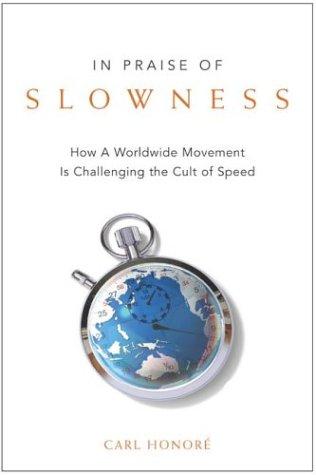
how a worldwide movement is challenging the cult of speed
310 pages
English language
Published 2004 by HarperSanFrancisco.
Challenges modern society's culture of speed and efficiency, identifying the benefits of a slower-paced lifestyle and its effect on dining habits, urban living, mental and physical health, and relationships.
"We live in the age of speed. The world around us moves faster than ever before. We strain to be more efficient, to cram more into each minute, each hour, every day. Since the Industrial Revolution shifted the world into high gear, the cult of speed has taken complete hold and pushed us to breaking point. Consider these facts: Americans spend 40% less time with their children than they did in the 1960s; American on average spends 72 minutes of every day behind the wheel of a car; a typical business executive now loses 68 hours a year to being put on hold; and American adults currently devote on average a meager half hour per week to making love. Living …
Challenges modern society's culture of speed and efficiency, identifying the benefits of a slower-paced lifestyle and its effect on dining habits, urban living, mental and physical health, and relationships.
"We live in the age of speed. The world around us moves faster than ever before. We strain to be more efficient, to cram more into each minute, each hour, every day. Since the Industrial Revolution shifted the world into high gear, the cult of speed has taken complete hold and pushed us to breaking point. Consider these facts: Americans spend 40% less time with their children than they did in the 1960s; American on average spends 72 minutes of every day behind the wheel of a car; a typical business executive now loses 68 hours a year to being put on hold; and American adults currently devote on average a meager half hour per week to making love. Living on the edge of exhaustion, we are constantly reminded by our bodies and minds that the pace of life is spinning out of control. In Praise of Slowness traces the history of our increasingly breathless relationship with time, and tackles the consequences and conundrum of living in this accelerated culture of our own creation. Why are we always in such a rush? What is the cure for time-sickness? Is it possible, or even desirable, to slow down? Realizing the price we pay for unrelenting speed, people all over the world are reclaiming their time and slowing down the pace - and living happier, more productive and healthier lives as a result. A slow revolution is taking place"--Jacket.