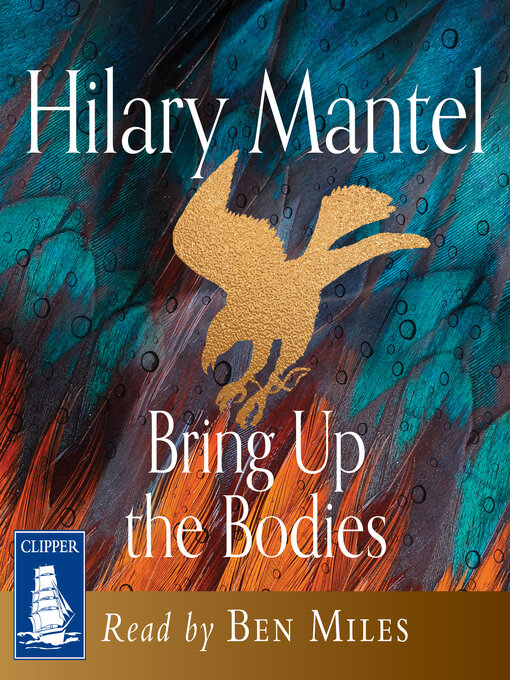
Bring Up the Bodies is an historical novel by Hilary Mantel; sequel to the award-winning Wolf Hall; and part of a trilogy charting the rise and fall of Thomas Cromwell, the powerful minister in the court of King Henry VIII. It won the 2012 Booker Prize and the 2012 Costa Book of the Year. The final novel in the trilogy, The Mirror and the Light, was published in March 2020.
An interesting read on how things might have happened and how Thomas Cromwell might have felt. I normally like more action in my historical fiction, but I'll read the next volume.
An interesting read on how things might have happened and how Thomas Cromwell might have felt. I normally like more action in my historical fiction, but I'll read the next volume.
After having trouble with Wolf Hall, I was reluctant to continue with the series. I am glad I did! Bring Up the Bodies was much easier to read than its predecessor. Hilary Mantel (or her editors) finally got rid of the "he" problem with the sometimes awkward construction: "He, Cromwell."
I have learned by now that Mantel is telling the story of Cromwell. He (yes, he, Cromwell) is the center of attention; not Henry, not Anne. Cromwell is really stuck in an ugly place; he has no choice but to do the king's bidding. To Mantel's credit, she maintains some suspense even though we know the outcome. Cromwell is portrayed as a subtle, brilliant, vindictive, selfish man, and I mean this in all the best ways.
My favorite quotes from this book:
By Henry: "We cannot help what we do, really. Once you are thundering down at a man, you …
After having trouble with Wolf Hall, I was reluctant to continue with the series. I am glad I did! Bring Up the Bodies was much easier to read than its predecessor. Hilary Mantel (or her editors) finally got rid of the "he" problem with the sometimes awkward construction: "He, Cromwell."
I have learned by now that Mantel is telling the story of Cromwell. He (yes, he, Cromwell) is the center of attention; not Henry, not Anne. Cromwell is really stuck in an ugly place; he has no choice but to do the king's bidding. To Mantel's credit, she maintains some suspense even though we know the outcome. Cromwell is portrayed as a subtle, brilliant, vindictive, selfish man, and I mean this in all the best ways.
My favorite quotes from this book:
By Henry: "We cannot help what we do, really. Once you are thundering down at a man, you cannot check." He says this while preparing for jousting, but really, isn't that just Henry in a nutshell?
By Cromwell: "You know I am not a man with whom you can have inconsequential conversations."
Subjects
Fiction
historical fiction
literary fiction
award:man_booker_prize=2012
Man Booker Prize Winner
History
Historical
Historischer Roman
Literary
Englisch
Fictional Works
Fiction / Literary
Great britain, fiction
Fiction, historical
FICTION / Historical
Large type books
Booker Prize Winner
nyt:combined-print-and-e-book-fiction=2012-05-27
New York Times bestseller
New York Times reviewed
Fiction, historical, general
Great Britain - History - Henry VIII, 1509-1547 - Fiction
Henry VIII, King of England, 1491-1547 - Fiction
Anne Boleyn, Queen, consort of Henry VIII, King of England, 1507-1536 - Fiction