Paperback, 416 pages
English language
Published Dec. 1, 2007 by Grove Press.
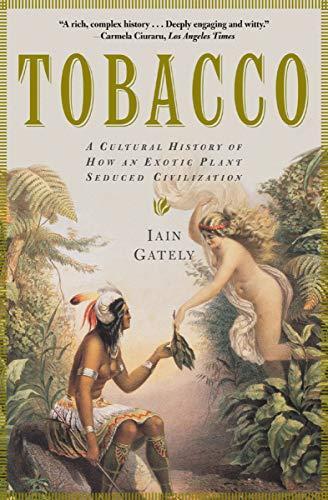
Paperback, 416 pages
English language
Published Dec. 1, 2007 by Grove Press.
When, in 1492, Christopher Columbus landed on a small island he believed to be China, he was met by representatives of the local tribe who offered him gifts of bread, fruit and dried leaves. He threw the leaves into the sea, but Columbus and his crew did not remain ignorant of these leaves' powers or purpose for long. In Africa tobacco was received as spiritual inspiration, the French effused over its beneficial properties, while those Reeking Gallants of England and Elizabethan society set about advertising it as the perfect medicine, capable of curing a number of illnesses, and so the weed made its way into the palaces of Europe.
Long before Columbus arrived in the New Word, tobacco was cultivated and enjoyed by the indigenous inhabitants of the Americas, who used it for medicinal, religious, and social purposes. But when Europeans began to colonize the American continents, it became …
When, in 1492, Christopher Columbus landed on a small island he believed to be China, he was met by representatives of the local tribe who offered him gifts of bread, fruit and dried leaves. He threw the leaves into the sea, but Columbus and his crew did not remain ignorant of these leaves' powers or purpose for long. In Africa tobacco was received as spiritual inspiration, the French effused over its beneficial properties, while those Reeking Gallants of England and Elizabethan society set about advertising it as the perfect medicine, capable of curing a number of illnesses, and so the weed made its way into the palaces of Europe.
Long before Columbus arrived in the New Word, tobacco was cultivated and enjoyed by the indigenous inhabitants of the Americas, who used it for medicinal, religious, and social purposes. But when Europeans began to colonize the American continents, it became something else entirely-a cultural touchstone of pleasure and success, and a coveted commodity that would transform the world economy forever. Iain Gately's Tobacco tells the epic story of an unusual plant and its unique relationship with the history of humanity, from its obscure ancient be ginnings, through its rise to global prominence, to its current embattled state today. In a lively narrative, Gately makes the case for the tobacco trade being the driving force behind the growth of the American colonies, the foundation of Dutch trading empire, the underpinning cause of the African slave trade, and the financial basis for victory in the American Revolution. Well-researched and wide-ranging, Tobacco is a vivid and provocative look at the surprising roles this plant has played in the culture of the world.