
Julia_98 reviewed Rabbit Is Rich by John Updike (Rabbit, #3)
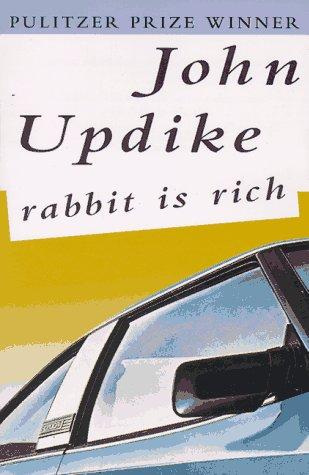
Rabbit Is Rich – John Updike
4 stars
In Rabbit Is Rich, Harry “Rabbit” Angstrom has reached a stage of life that once seemed to promise security. He is financially comfortable, helps run a Toyota dealership, lives in a stable-looking marriage with Janice, and has entered the prosperous American middle class of the late 1970s. Yet John Updike makes that comfort feel restless almost immediately.
Rabbit still measures himself against other men, other marriages, and the younger version of himself that he has not entirely left behind. Money gives him choices, but it does not give him peace. He remains alert to every slight, every erotic possibility, and every sign that the world may be moving on without him. That mixture of confidence and insecurity makes him difficult, often selfish, but never uninteresting.
The novel is especially sharp about prosperity. Rabbit’s life contains cars, leisure, property, social gatherings, and the confidence of someone who believes …
In Rabbit Is Rich, Harry “Rabbit” Angstrom has reached a stage of life that once seemed to promise security. He is financially comfortable, helps run a Toyota dealership, lives in a stable-looking marriage with Janice, and has entered the prosperous American middle class of the late 1970s. Yet John Updike makes that comfort feel restless almost immediately.
Rabbit still measures himself against other men, other marriages, and the younger version of himself that he has not entirely left behind. Money gives him choices, but it does not give him peace. He remains alert to every slight, every erotic possibility, and every sign that the world may be moving on without him. That mixture of confidence and insecurity makes him difficult, often selfish, but never uninteresting.
The novel is especially sharp about prosperity. Rabbit’s life contains cars, leisure, property, social gatherings, and the confidence of someone who believes he has finally escaped earlier forms of failure. Updike does not simply mock this world. He notices its pleasures, its rituals, and its genuine sense of achievement. At the same time, he shows how easily comfort can become another way of avoiding difficult questions.
Rabbit’s relationship with Nelson gives the book much of its emotional tension. His son is approaching adulthood, but Rabbit cannot see him without also seeing his own disappointments and fears reflected back at him. Their conflict is not merely generational. It is about masculinity, money, authority, and the painful realization that love does not automatically create understanding.
Janice is equally important. She is no longer only the neglected wife from the earlier novels; she has become more self-assured and less willing to accept Rabbit’s version of events without resistance. Their marriage survives partly through familiarity, partly through compromise, and partly through the fact that neither of them knows what another life would truly look like.
I liked the way Updike writes ordinary surroundings with such intensity. A kitchen, a car dealership, a golf course, a suburban street, or a family dinner can suddenly reveal envy, desire, embarrassment, or social competition. His sentences are attentive to surfaces, but they constantly suggest the unease beneath them.
Rabbit Is Rich is not a novel that asks the reader to approve of its protagonist. Its strength lies in the uncomfortable intimacy of that perspective. Rabbit has gained wealth, status, and apparent stability, but he has not escaped his own appetites or his fear of decline. For me, the novel’s enduring question is whether success can ever satisfy someone who has spent his life running from himself.