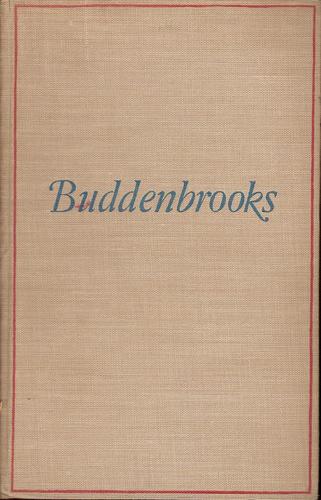

Julia_98 reviewed Buddenbrooks by Thomas Mann (Everyman's library ;)
Watching a Family Fade One Generation at a Time
5 stars
Few novels have made me feel the passage of time as vividly as Buddenbrooks. Rather than focusing on a single dramatic event, Thomas Mann traces the gradual rise and decline of a prosperous merchant family across several generations. As I moved through the lives of the Buddenbrooks, I felt as though I were watching a grand house slowly lose its foundations. Nothing collapses overnight. The change arrives through countless small decisions, disappointments, and shifts in character.
The novel begins with confidence and stability. The family enjoys wealth, social respect, and a strong sense of identity. Yet as generations pass, cracks begin to appear. I felt particularly drawn to Thomas Buddenbrook, whose dedication to duty and family reputation carries both strength and burden. His determination impressed me, but it also made me uneasy. The more he sacrifices himself to preserve the family legacy, the more isolated he becomes.
…
Few novels have made me feel the passage of time as vividly as Buddenbrooks. Rather than focusing on a single dramatic event, Thomas Mann traces the gradual rise and decline of a prosperous merchant family across several generations. As I moved through the lives of the Buddenbrooks, I felt as though I were watching a grand house slowly lose its foundations. Nothing collapses overnight. The change arrives through countless small decisions, disappointments, and shifts in character.
The novel begins with confidence and stability. The family enjoys wealth, social respect, and a strong sense of identity. Yet as generations pass, cracks begin to appear. I felt particularly drawn to Thomas Buddenbrook, whose dedication to duty and family reputation carries both strength and burden. His determination impressed me, but it also made me uneasy. The more he sacrifices himself to preserve the family legacy, the more isolated he becomes.
What affected me most was the contrast between business success and personal fulfillment. Mann suggests that prosperity alone cannot sustain a family indefinitely. Artistic sensitivity, intellectual curiosity, and emotional vulnerability begin to emerge in later generations, often at odds with the practical demands of commerce. Reading these sections, I felt a growing melancholy. Characters such as Hanno Buddenbrook seem unsuited to the world they inherit, and their struggles gave the novel much of its emotional depth.
Mann’s attention to detail made every stage of the family's transformation feel believable. Social gatherings, business discussions, marriages, illnesses, and private reflections all contribute to a larger portrait of decline. I never felt rushed. Instead, I felt immersed in the rhythm of lives unfolding over decades.
The novel’s emotional power comes from its patience. There are moments of happiness and achievement, but they are always shadowed by impermanence. As the family weakens, I felt less interested in individual failures than in the broader movement of history and change.
Closing the book, I felt thoughtful and quietly saddened. Buddenbrooks reminded me that decline is not always dramatic. Sometimes it unfolds gradually, hidden within success itself. Thomas Mann left me reflecting on inheritance, ambition, and the fragile balance between preserving tradition and adapting to a changing world.