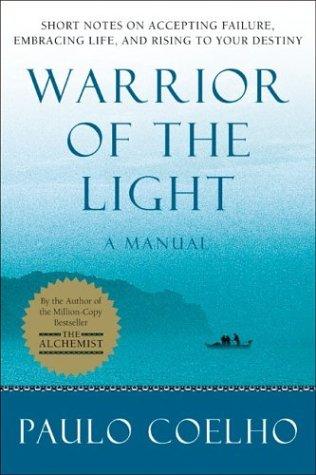

Julia_98 reviewed Warrior of the Light by Paulo Coelho
Courage Without the Absence of Fear
5 stars
I approached Warrior of the Light expecting a conventional guide to courage, but Paulo Coelho offers something more reflective and fragmented. The book is built from short meditations about discipline, fear, faith, failure, and perseverance. Rather than following a continuous plot, it presents a symbolic warrior who learns how to act with conviction while accepting doubt, weakness, and uncertainty.
What interested me most was the tension between strength and vulnerability. Coelho’s warrior is not fearless, flawless, or permanently confident. He hesitates, makes mistakes, feels discouraged, and sometimes loses direction. Yet he continues. I found this idea reassuring because it removes heroism from the world of extraordinary people and places it within ordinary human experience.
Some passages felt inspiring, especially those about learning from defeat and remaining faithful to a chosen path. Others seemed deliberately simple, almost like proverbs. At times, I wished the reflections had been developed further, …
I approached Warrior of the Light expecting a conventional guide to courage, but Paulo Coelho offers something more reflective and fragmented. The book is built from short meditations about discipline, fear, faith, failure, and perseverance. Rather than following a continuous plot, it presents a symbolic warrior who learns how to act with conviction while accepting doubt, weakness, and uncertainty.
What interested me most was the tension between strength and vulnerability. Coelho’s warrior is not fearless, flawless, or permanently confident. He hesitates, makes mistakes, feels discouraged, and sometimes loses direction. Yet he continues. I found this idea reassuring because it removes heroism from the world of extraordinary people and places it within ordinary human experience.
Some passages felt inspiring, especially those about learning from defeat and remaining faithful to a chosen path. Others seemed deliberately simple, almost like proverbs. At times, I wished the reflections had been developed further, since several ideas appear briefly and then disappear. Still, the concise form also made the book easy to revisit. I could pause after a page and consider how its message related to my own choices.
The spiritual tone is central throughout. Coelho blends religious language, intuition, personal responsibility, and trust in life. I did not agree with every statement, but I appreciated the book’s refusal to treat uncertainty as weakness. Its warrior grows by confronting contradiction rather than escaping it.
For me, Warrior of the Light works best when read slowly instead of all at once. It is less a manual with fixed instructions than a collection of reminders about courage, humility, and persistence. I finished it with a calmer sense of determination. The book did not answer every question, but it encouraged me to face difficult moments with greater patience and to understand that resilience can include fear. That quiet, humane message remained with me long after the final reflection ended.