
Walking Between Light and Shadow With Demian
5 stars
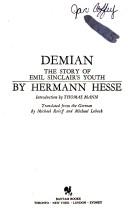
When I read Demian, I felt as though I had been quietly invited into an inner conversation I had avoided for years. Hermann Hesse tells the story through Emil Sinclair, a young boy who grows into self awareness by confronting the divided nature of his world. As I followed Sinclair’s journey, I felt the tension between innocence and experience settle inside me. The novel does not rush this change. Instead, it unfolds like a slow awakening, one thought at a time.
Sinclair’s early struggle between the safe, moral world of his family and the darker pull of independence felt deeply familiar. I remember feeling uneasy as he crossed that invisible line, guided by Max Demian, whose calm confidence fascinated me. Demian never felt like a simple mentor. He appeared more like a mirror, reflecting truths Sinclair was not yet ready to name. That subtle guidance stirred my own …
When I read Demian, I felt as though I had been quietly invited into an inner conversation I had avoided for years. Hermann Hesse tells the story through Emil Sinclair, a young boy who grows into self awareness by confronting the divided nature of his world. As I followed Sinclair’s journey, I felt the tension between innocence and experience settle inside me. The novel does not rush this change. Instead, it unfolds like a slow awakening, one thought at a time.
Sinclair’s early struggle between the safe, moral world of his family and the darker pull of independence felt deeply familiar. I remember feeling uneasy as he crossed that invisible line, guided by Max Demian, whose calm confidence fascinated me. Demian never felt like a simple mentor. He appeared more like a mirror, reflecting truths Sinclair was not yet ready to name. That subtle guidance stirred my own questions about identity and choice.
The novel’s symbols stayed with me. The mark of Cain, the idea of Abraxas, and the recurring presence of dreams gave the story a spiritual weight. I felt challenged rather than comforted by these ideas. They asked me to accept contradiction instead of resolution. Hesse’s language made introspection feel unavoidable. At times, I had to pause, not from confusion, but from recognition.
As Sinclair grows, the story shifts from childhood conflict to a deeper search for meaning. His isolation, his brief peace, and his eventual acceptance of uncertainty felt honest to me. I sensed that the novel was less about answers and more about courage, the courage to live without borrowing beliefs from others.
By the final pages, I felt a quiet clarity mixed with unease. Demian did not leave me inspired in a simple way. It left me aware. The book reminded me that becoming oneself is rarely gentle. It requires facing both light and shadow and learning to walk forward without denying either.