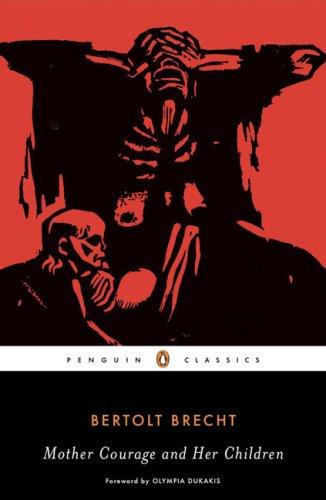

Julia_98 reviewed Mother Courage and Her Children (Penguin Classics) by Bertolt Brecht (Penguin classics)
The Wagon That Never Leaves the War Behind
4 stars
Mother Courage and Her Children refuses to treat war as a stage for heroism. Bertolt Brecht follows Anna Fierling, known as Mother Courage, as she pulls her canteen wagon through the Thirty Years’ War. She sells food, drink, and small necessities to soldiers from every side. The wagon keeps her family alive, but it also binds her livelihood to the destruction of others.
What struck me most is that Mother Courage cannot be reduced to either a devoted mother or a ruthless profiteer. She loves her children, yet she bargains when urgency demands sacrifice. She understands that war is cruel, but she still believes she can survive by trading with it. Brecht makes this contradiction painful rather than sentimental.
Each of her children responds to the world differently. Eilif is brave in a way that the military can use and discard. Swiss Cheese is honest, but his honesty …
Mother Courage and Her Children refuses to treat war as a stage for heroism. Bertolt Brecht follows Anna Fierling, known as Mother Courage, as she pulls her canteen wagon through the Thirty Years’ War. She sells food, drink, and small necessities to soldiers from every side. The wagon keeps her family alive, but it also binds her livelihood to the destruction of others.
What struck me most is that Mother Courage cannot be reduced to either a devoted mother or a ruthless profiteer. She loves her children, yet she bargains when urgency demands sacrifice. She understands that war is cruel, but she still believes she can survive by trading with it. Brecht makes this contradiction painful rather than sentimental.
Each of her children responds to the world differently. Eilif is brave in a way that the military can use and discard. Swiss Cheese is honest, but his honesty becomes dangerous in a system where survival requires caution. Kattrin, unable to speak, possesses the clearest moral courage of them all. Her final act is one of the most moving moments in the play because it brings no private reward.
I appreciated that Brecht does not allow the audience to become comfortably absorbed in suffering. Songs interrupt the action, scenes jump across years, and characters often reveal the outcome before it happens. These devices may create distance, but they do not make the tragedy less powerful. Instead, they force us to notice the social mechanisms that turn human lives into losses.
The relationship between war and business remains central. Mother Courage does not create the conflict, but she tries to make it economically useful. That choice makes her both understandable and devastating. Her calculations are never simply signs of greed. They are the habits of someone who has learned that poverty leaves little room for purity.
The play also made me think about the false promise of endurance. Mother Courage survives, but survival is not presented as victory. When she continues alone with the wagon, she seems unable to recognize that the war has already taken everything that gave her struggle meaning.
After reading Mother Courage and Her Children, I felt that Brecht’s anger is directed not only at military violence, but at every system that teaches people to adapt to it. For me, the play’s lasting force comes from its refusal to separate private grief from public profit.