Claudia reviewed A Room of One's Own by Virginia Woolf
None
5 stars
Bueno, por fin terminado un gran pendiente y, casi 100 años después de su publicación, parece mentira que aún ciertas reivindicaciones que presenta Woolf sigan siendo necesarias.
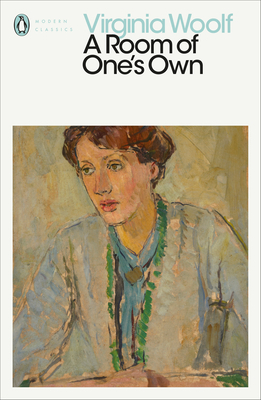
Paperback, 93 pages
English language
Published July 30, 2020 by Penguin.
A Room of One's Own grew out of a lecture that Virginia Woolf had been invited to give at Girton College, Cambridge in 1928. Ranging over Jane Austen and Charlotte Brontë and why neither of them could have written War and Peace, over the silent fate of Shakespeare gifted (and imaginary) sister, over the effects of poverty and chastity on female creativity, she gives us one of the greatest feminist polemics of the century.
A Room of One's Own grew out of a lecture that Virginia Woolf had been invited to give at Girton College, Cambridge in 1928. Ranging over Jane Austen and Charlotte Brontë and why neither of them could have written War and Peace, over the silent fate of Shakespeare gifted (and imaginary) sister, over the effects of poverty and chastity on female creativity, she gives us one of the greatest feminist polemics of the century.
Bueno, por fin terminado un gran pendiente y, casi 100 años después de su publicación, parece mentira que aún ciertas reivindicaciones que presenta Woolf sigan siendo necesarias.
Una habitación propia de Virginia Woolf es un ensayo que me tocó profundamente y cuya lectura sentí como un espejo de lo que muchas veces he vivido al escribir y pensar en libertad. Woolf parte de una pregunta simple pero poderosa: ¿qué necesitan las mujeres para crear literatura? Su respuesta, clara y radical para su época, es que una mujer debe tener dinero y un espacio propio si realmente quiere escribir ficción.
Desde el comienzo, el tono del ensayo me atrapó, porque sentí que no era solo una reflexión académica, sino una confesión íntima. Woolf usa experiencias personales y escenarios imaginarios —como paseos por “Oxbridge” y entrevistas con personajes ficticios— para mostrar cómo la falta de recursos y de reconocimiento ha limitado históricamente a las mujeres.
Mientras leía, me conmovió su lucidez: no solo denuncia la ausencia de espacio físico o dinero, sino también la invisibilidad de las …
Una habitación propia de Virginia Woolf es un ensayo que me tocó profundamente y cuya lectura sentí como un espejo de lo que muchas veces he vivido al escribir y pensar en libertad. Woolf parte de una pregunta simple pero poderosa: ¿qué necesitan las mujeres para crear literatura? Su respuesta, clara y radical para su época, es que una mujer debe tener dinero y un espacio propio si realmente quiere escribir ficción.
Desde el comienzo, el tono del ensayo me atrapó, porque sentí que no era solo una reflexión académica, sino una confesión íntima. Woolf usa experiencias personales y escenarios imaginarios —como paseos por “Oxbridge” y entrevistas con personajes ficticios— para mostrar cómo la falta de recursos y de reconocimiento ha limitado históricamente a las mujeres.
Mientras leía, me conmovió su lucidez: no solo denuncia la ausencia de espacio físico o dinero, sino también la invisibilidad de las mujeres en los libros escritos por hombres. Me hizo pensar en cuántas voces se han perdido porque no se les permitió tener ni cuarto ni voz.
Lo que más me impactó fue la forma en que Woolf combina pensamiento riguroso y sensibilidad. Su lectura no es fría; tiene un pulso emocional que me obligó a cuestionarme a mí mismo: ¿cuánto de mi creatividad depende de condiciones tan materiales como el tiempo, el silencio o la estabilidad económica?
Al terminar, me quedé con una mezcla de gratitud y desafío. Agradecí que un texto tan honesto exista y me desafió a valorar mi propio espacio creativo como un derecho, no un lujo. Una habitación propia me recordó que tener un cuarto propio es un paso esencial para que cualquier voz pueda al fin ponerse a escribir.
This was my second time reading this. The first time was long ago in school—from which I remembered the general premise, the fact that I liked it, and little else. This time I read it with a reading group. The other members of this group drew my attention to aspects of, and ambiguities in, the book that I might otherwise have missed. It’s a book with a lot of interesting and powerful ideas to ponder. It is also a very entertaining and often funny book. Well worth reading for its place in the history of women’s literature, for its exploration of the history of women in (Western) society, and for its analysis of, and ponderings on, literature in general.
Pour moi ça a été une révélation ! Je l'avais lu plus jeune et relire cette traduction de Marie Darrieussecq m'a fait tout redécouvrir ! C'était génial. Je vais le garder et le relire sûrement plus tard encore et encre...
Pour moi ça a été une révélation ! Je l'avais lu plus jeune et relire cette traduction de Marie Darrieussecq m'a fait tout redécouvrir ! C'était génial. Je vais le garder et le relire sûrement plus tard encore et encre...