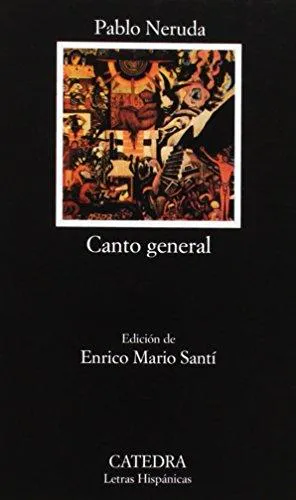

Julia_98 reviewed Canto General by Pablo Neruda
Hearing a Continent Speak in a Thousand Voices
5 stars
Rather than feeling like a single book, Canto General felt to me like an immense landscape unfolding page after page. Pablo Neruda gathers history, politics, nature, and memory into a sweeping poetic vision of Latin America. As I read, I often felt less like a reader and more like a traveler moving across mountains, forests, ancient civilizations, and centuries of struggle. The scale of the work impressed me immediately. The collection traces the story of the continent from its natural origins through conquest, oppression, resistance, and renewal. What struck me most was Neruda’s ability to make geography feel alive. Rivers, stones, trees, and mountains are not simply described. They seem to carry memory. Reading these passages, I felt a deep sense of connection between people and place. The land itself becomes a witness to history. At the same time, the poems confront injustice directly. Neruda writes about exploitation, colonial violence, …
Rather than feeling like a single book, Canto General felt to me like an immense landscape unfolding page after page. Pablo Neruda gathers history, politics, nature, and memory into a sweeping poetic vision of Latin America. As I read, I often felt less like a reader and more like a traveler moving across mountains, forests, ancient civilizations, and centuries of struggle. The scale of the work impressed me immediately. The collection traces the story of the continent from its natural origins through conquest, oppression, resistance, and renewal. What struck me most was Neruda’s ability to make geography feel alive. Rivers, stones, trees, and mountains are not simply described. They seem to carry memory. Reading these passages, I felt a deep sense of connection between people and place. The land itself becomes a witness to history. At the same time, the poems confront injustice directly. Neruda writes about exploitation, colonial violence, and political struggle with unmistakable conviction. I felt anger in some sections and admiration in others. His sympathy for workers, indigenous peoples, and ordinary citizens gives the collection an emotional force that extends beyond politics. Even when I did not share every perspective, I could feel the sincerity behind the voice. The language often felt grand and expansive, yet it never lost its human center. Individual lives appear within vast historical movements, and that balance moved me. I found myself pausing frequently, not because the poems were difficult, but because they seemed to demand reflection. By the final pages, I felt both energized and humbled. Canto General is not merely a collection of poems. It is an attempt to give voice to a continent and its history. Closing the book, I carried a sense of admiration for Neruda’s ambition and a deeper appreciation for how poetry can transform history into something vivid, emotional, and unforgettable.