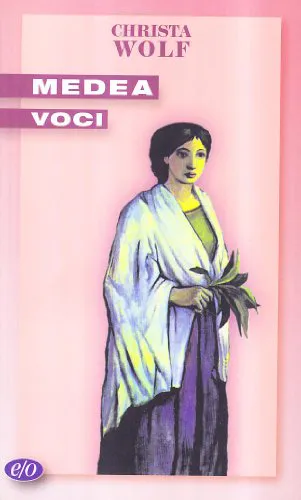

Julia_98 reviewed Medea. Voci by Christa Wolf
Medea Beyond the Crime
5 stars
Medea surprised me because Christa Wolf refuses to repeat the version of the myth that most readers already know. Instead of presenting Medea as the foreign woman who murders her children out of jealousy, the novel rebuilds her as a healer, an outsider, and eventually a scapegoat. The result is not a simple defence of an innocent heroine. It is a sharp examination of how a society creates the figure it needs to fear.
The choice of multiple voices gives the story its tension. Medea does not control the narrative alone. Jason, Glauce, Agameda and several other figures speak as well, each revealing a different layer of Corinth’s political and emotional life. I found this structure especially effective because truth never arrives as a single declaration. It must be assembled from competing memories, silences, and deliberate distortions.
Wolf’s Corinth is far from the shining city of classical legend. …
Medea surprised me because Christa Wolf refuses to repeat the version of the myth that most readers already know. Instead of presenting Medea as the foreign woman who murders her children out of jealousy, the novel rebuilds her as a healer, an outsider, and eventually a scapegoat. The result is not a simple defence of an innocent heroine. It is a sharp examination of how a society creates the figure it needs to fear.
The choice of multiple voices gives the story its tension. Medea does not control the narrative alone. Jason, Glauce, Agameda and several other figures speak as well, each revealing a different layer of Corinth’s political and emotional life. I found this structure especially effective because truth never arrives as a single declaration. It must be assembled from competing memories, silences, and deliberate distortions.
Wolf’s Corinth is far from the shining city of classical legend. Beneath its public order lie violence, dynastic secrets, and anxiety about power. Medea becomes dangerous not because she possesses supernatural evil, but because she sees too much and refuses to pretend otherwise. Her foreignness makes her convenient to blame when the city needs to protect its rulers and its self-image.
Jason also becomes more complex than the familiar faithless husband. He is weak, ambitious, and shaped by a culture that rewards obedience to power. His betrayal hurts precisely because it is not grand or mysterious. He chooses safety, status, and acceptance over loyalty to the woman who once helped him survive.
I admired the restraint of Wolf’s language. She writes the myth with clarity, but the emotional pressure remains intense. The novel does not depend on spectacular scenes. Its tragedy grows through exclusion, suspicion, and the gradual realization that facts have little force once a public story has been chosen.
By the end, Medea felt less like a retelling than a challenge to the act of retelling itself. For me, Wolf asks who benefits when a woman becomes a monster in cultural memory, and what disappears when nobody listens to her version of events.