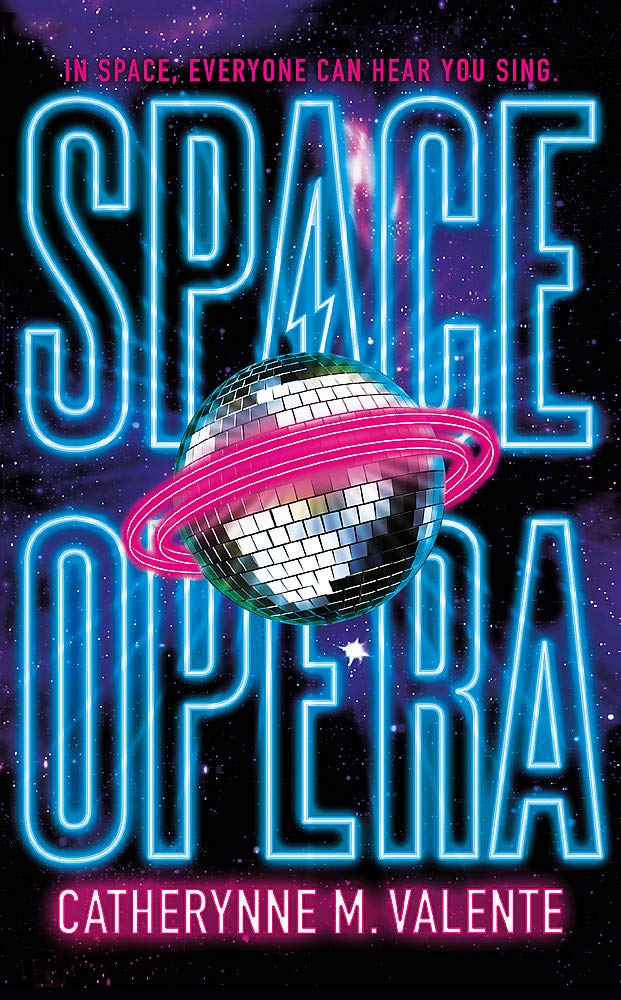

enne📚 reviewed Space Opera by Catherynne M. Valente
None
4 stars
This is our October 2026 #SFFBookClub pick. I read this eight years ago when it came out, and thought I'd give it a reread for book club.
This feels much in the same lane as Douglas Adams or Terry Pratchett, with ridiculous band name puns, extremely long sentences, and constant digressions. The book explicitly doesn't take itself seriously, and unsurprisingly the book is incredibly light on plot. You could probably sum up the events of the book in a couple of sentences, but maybe also that's ok. That's not what you're here for.
(I do wonder a little how much this will hold up in ten years, with its references to Uber, Skrillex, and Clippy. This is already somewhat true for how Eurovision itself has soured.)
There is a moment of brief moment of seriousness when we finally see the details of the tragic incident at the …
This is our October 2026 #SFFBookClub pick. I read this eight years ago when it came out, and thought I'd give it a reread for book club.
This feels much in the same lane as Douglas Adams or Terry Pratchett, with ridiculous band name puns, extremely long sentences, and constant digressions. The book explicitly doesn't take itself seriously, and unsurprisingly the book is incredibly light on plot. You could probably sum up the events of the book in a couple of sentences, but maybe also that's ok. That's not what you're here for.
(I do wonder a little how much this will hold up in ten years, with its references to Uber, Skrillex, and Clippy. This is already somewhat true for how Eurovision itself has soured.)
There is a moment of brief moment of seriousness when we finally see the details of the tragic incident at the core of the band breaking up, of the parallels of UK deportations with galactic war, and the terror of uncertainty of whatever horrors the television is always bringing you. I think this extremely brief few paragraphs give the book just the tiniest bit of depth and seriousness that it needs.
Because the opposite of fascism isn’t anarchy, it’s theater. When the world is fucked, you go to the theater, you go to the shine, and when the bad men come, all there is left to do is sing them down.
A book whose climactic moment is singing your tragedies and heartbreak so hard that you and your entire species are finally seen and saved is probably not going to have a nuanced view on this, but it's interesting how much my feelings on whether art will save us have changed over time. It's hard not to think of the classic Vonnegut quote about the Vietnam war here.
Also tangentially, I was just watching this Verity Ritchie video about bisexual chic in the 2000's (youtube link, sorry) which intersects with the aesthetics and vibe of this novel quite a bit. The band members in Space Opera feel like they are copying the aesthetics and bisexual glam of the 70's while on stage but then being staid heterosexual monogamous Englishblokemen behind the scenes, much like a number of emo bands that this video discusses. Bringing this back around to my original tangent, this video also makes the argument that it's more likely that society changes art than the other way around—they point out that Will and Grace got released right as US opinion polls shifted to the majority being supportive of homosexuality, and talk about different times where it's been more or less popular for celebrities and musicians to engage in bisexual chic.
At any rate, this is all to say that I quite disagree with this book's position that the opposite of fascism is theater. Art and music can certainly be one tactic in our arsenal, like unicorn and frog mascots at a protest. This isn't to say that art isn't necessary or important! I just don't think it's going to save us, and we're certainly not going to defeat fascism by going to the theater.