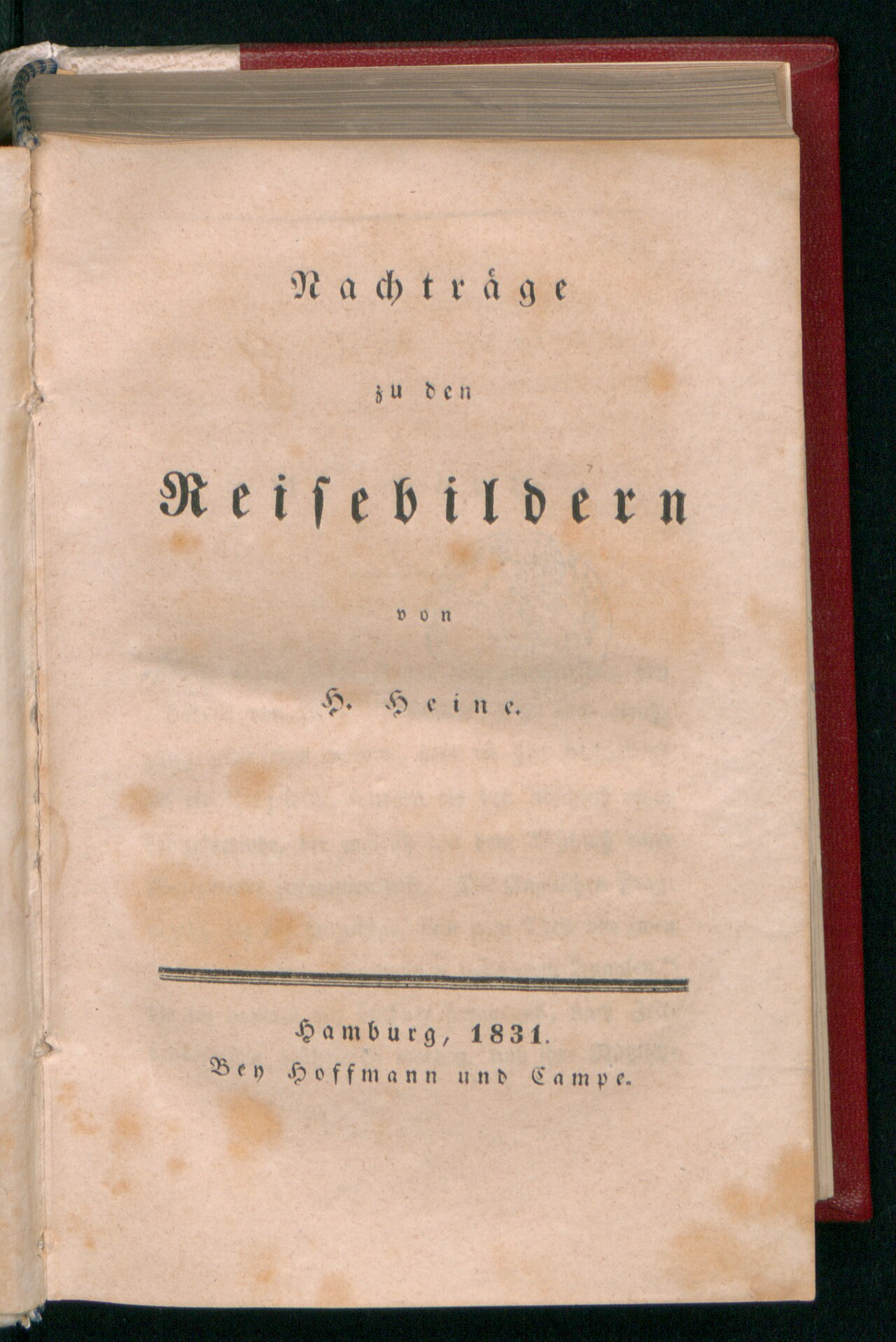

Julia_98 reviewed Reisebilder by Heinrich Heine
Travel Pictures – Heinrich Heine
4 stars
In Travel Pictures, Heinrich Heine turns travel writing into something much more restless and inventive. The landscapes, towns, roads, inns, and sea views matter, but they are never simply described for their own sake. Every journey becomes an occasion for memory, satire, literary reflection, political criticism, and sudden changes of mood.
Heine’s narrator is a difficult companion in the best sense. He can be enchanted by a mountain path, irritated by provincial narrow-mindedness, amused by his own discomfort, and ready to interrupt a scene with a joke or an argument. This shifting voice makes the book feel unusually modern. The reader is not given a polished tour; instead, one follows a mind constantly reacting to the world around it.
The Harz journey is especially memorable because it combines nature with social observation. Heine notices beauty, but he also notices the institutions, conventions, and intellectual pretensions that shape …
In Travel Pictures, Heinrich Heine turns travel writing into something much more restless and inventive. The landscapes, towns, roads, inns, and sea views matter, but they are never simply described for their own sake. Every journey becomes an occasion for memory, satire, literary reflection, political criticism, and sudden changes of mood.
Heine’s narrator is a difficult companion in the best sense. He can be enchanted by a mountain path, irritated by provincial narrow-mindedness, amused by his own discomfort, and ready to interrupt a scene with a joke or an argument. This shifting voice makes the book feel unusually modern. The reader is not given a polished tour; instead, one follows a mind constantly reacting to the world around it.
The Harz journey is especially memorable because it combines nature with social observation. Heine notices beauty, but he also notices the institutions, conventions, and intellectual pretensions that shape how people experience it. Mountains do not become symbols of pure escape. They remain part of a Germany marked by censorship, class distinctions, nationalism, and cultural stagnation.
What I enjoyed most is the freedom of the form. Poetry, anecdote, autobiography, criticism, dreamlike fantasy, and direct commentary all appear within the same work. Heine refuses to keep travel literature in one place. A description of a landscape can suddenly become a reflection on politics, while a personal memory may turn into a satire on Romantic sentimentality.
His humour is essential. Heine can be sharply critical without becoming heavy-handed because he also directs irony at himself. The voice is confident, but never completely solemn. That mixture gives Travel Pictures an energy that many more conventional travel accounts lack.
For me, the book remains fascinating because it is really about movement in several senses: travelling through places, moving between moods, and trying to think freely in a society that often resists freedom. Heine makes the journey feel less like an escape from reality than a brilliant way of exposing it.