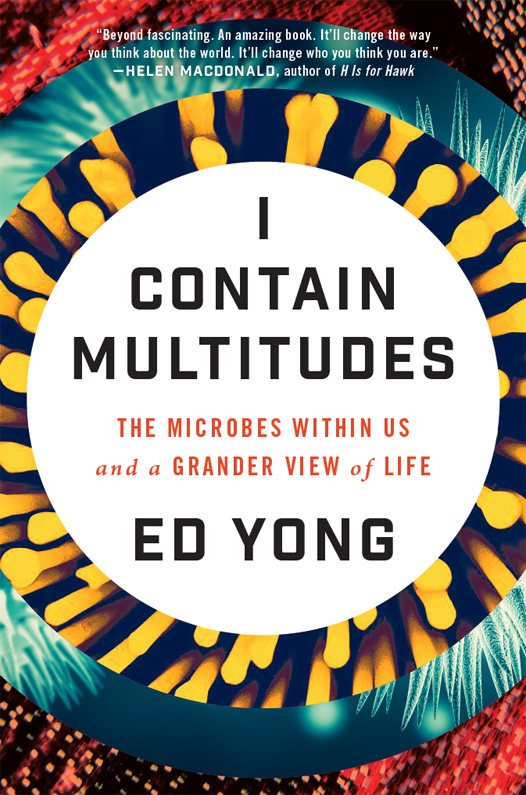

Soh Kam Yung reviewed I Contain Multitudes by Ed Yong
A book on the fascinating field of microbiomes
5 stars
A fantastic book covering an area that is the hot topic of the day in biology: the microbiome and how it affects us all. However, as the author shows, there is currently a lot of hype surrounding some aspects of the microbiome, like in probiotics and fecal transplants. This book will help readers to navigate the minefield of papers and articles about the microbiome and show you just what we know and, more importantly, what we still don't know about it and how it can affect our lives and the environment.
Ed Yong starts with a look at how people like Leeuwenhoek discovered the world of bacteria and then goes on to show how microbes can interact with multi-celled organisms, like us, to form and grow them; for the fact is the genes and cells of animals (and probably plants) need the microbes to help mediate the growth of …
A fantastic book covering an area that is the hot topic of the day in biology: the microbiome and how it affects us all. However, as the author shows, there is currently a lot of hype surrounding some aspects of the microbiome, like in probiotics and fecal transplants. This book will help readers to navigate the minefield of papers and articles about the microbiome and show you just what we know and, more importantly, what we still don't know about it and how it can affect our lives and the environment.
Ed Yong starts with a look at how people like Leeuwenhoek discovered the world of bacteria and then goes on to show how microbes can interact with multi-celled organisms, like us, to form and grow them; for the fact is the genes and cells of animals (and probably plants) need the microbes to help mediate the growth of bodies. Experiments with sterile (germ-free) animals show they don't grow or develop well without the microbes.
However, the microbes are not the selfless helpers of animals. Like any other organism, they also act in their self-interest and will grow and multiply uncontrollably inside animals (causing diseases) unless they are controlled by the body. This back-and-forth of conflict and cooperation is shown to occur not just in bodies but also in our environment. Numerous examples, from coral reefs that grow or die depending on which types of microbes are around, to malnutrition in children, are evidence of the action of different kinds of microbiomes.
Now that we are starting to learn about microbiomes, what can we do about it. Here, the author covers the various experiments and studies that have been conducted or are being conducted to try to understand how various microbiomes work. He is also careful not to over-state the results of the studies for, in reality, we still know very little about the interactions of the microbes in the microbiomes and the changes we introduce may be for the better or worse.
This book covers the very latest research into the microbiome; a look at the very long list of endnotes show some research where the results have yet to be published at the book's release. A definite must-read for those who want a glimpse of how microbes, despite their very small size, can affect our environment in surprising ways.