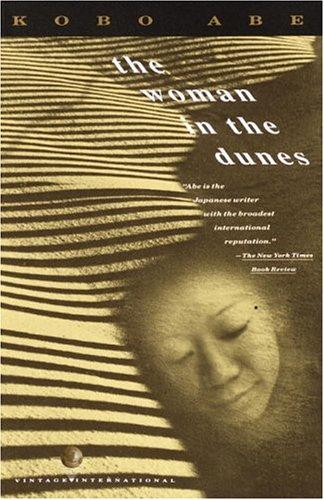

Julia_98 reviewed The woman in the dunes by Abe Kōbō
Buried Beneath Sand, I Discovered Questions That Would Not Let Go
4 stars
Rarely have I encountered a novel that transformed an ordinary landscape into such a powerful meditation on human existence. The Woman in the Dunes by Kōbō Abe stands as a remarkable work of existential literature, using an isolated setting to explore freedom, identity, and the meaning of routine. From the opening pages, I felt that I was entering a world governed by unfamiliar rules, where every handful of sand carried symbolic weight.
The story follows Niki Jumpei, an amateur entomologist who becomes trapped in a deep sand pit after visiting a remote village. Forced to live with a widowed woman whose daily survival depends on endlessly removing drifting sand, he initially devotes all his energy to escape. As I followed his struggle, I felt both his frustration and his determination. The seemingly endless labor appeared meaningless at first, yet it gradually revealed deeper questions about purpose and adaptation.
…Rarely have I encountered a novel that transformed an ordinary landscape into such a powerful meditation on human existence. The Woman in the Dunes by Kōbō Abe stands as a remarkable work of existential literature, using an isolated setting to explore freedom, identity, and the meaning of routine. From the opening pages, I felt that I was entering a world governed by unfamiliar rules, where every handful of sand carried symbolic weight.
The story follows Niki Jumpei, an amateur entomologist who becomes trapped in a deep sand pit after visiting a remote village. Forced to live with a widowed woman whose daily survival depends on endlessly removing drifting sand, he initially devotes all his energy to escape. As I followed his struggle, I felt both his frustration and his determination. The seemingly endless labor appeared meaningless at first, yet it gradually revealed deeper questions about purpose and adaptation.
What affected me most was the transformation of the protagonist. His imprisonment begins as a physical condition, but it slowly becomes psychological and philosophical. I found myself wondering how much of freedom depends on circumstance and how much depends on perception. Abe never offers easy answers. Instead, he invites the reader to experience uncertainty alongside the characters, and I appreciated that quiet honesty.
The relationship between Jumpei and the woman develops with subtle complexity. Their shared existence is built on necessity rather than romance, yet mutual understanding gradually replaces distance. I found these moments unexpectedly moving because they emerge naturally from hardship instead of sentimentality. The relentless presence of the sand itself became another character, shaping every decision and emotion.
Abe’s restrained prose heightened the novel’s atmosphere. The repetition of daily work created a hypnotic rhythm that made me feel the slow passage of time. Rather than becoming repetitive, the routine deepened my reflection on habit, responsibility, and resilience.
Closing the book, I felt thoughtful rather than resolved. The Woman in the Dunes reminded me that the boundaries between captivity and acceptance are often less clear than they first appear. I finished the novel carrying a quiet sense of unease, but also admiration for Abe’s ability to transform a simple premise into a profound exploration of what it means to endure, adapt, and continue searching for meaning.